When choosing tiles for a home in the UAE, appearance is only one part of the decision. Heat, humidity, sand, moisture, foot traffic and the intended application can all affect how a tile performs over time.
Two of the most popular choices are porcelain tiles and ceramic tile. Although both are manufactured from clay-based materials, differences in production, density and water absorption make them suitable for different applications.
Two of the most popular choices are porcelain tiles and ceramic tile. Although both are manufactured from clay-based materials, differences in production, density and water absorption make them suitable for different applications.
For many UAE homes, porcelain tiles are the preferred option for flooring, kitchens, bathrooms, balconies and outdoor spaces, while ceramic tiles remain an attractive and cost-effective choice for selected indoor walls, decorative applications and lower-impact areas.
Here is how to decide which option is right for your home.
Why Tile Selection Matters in the UAE Climate
The UAE creates some very specific challenges for building materials.
Dubai, Sharjah, Abu Dhabi and the Northern Emirates regularly experience intense summer temperatures, strong sunlight, humidity, dust and sand.
Choosing the correct tile specification therefore becomes particularly important.
Insert your content here
1. Extreme Heat
Outdoor surfaces exposed to direct sunlight can become extremely hot during the UAE summer.
Porcelain's dense structure makes it particularly suitable for environments exposed to significant temperature changes.
This becomes important on:
• Villa terraces
• Balconies
• Garden pathways
• Outdoor seating areas
• Pool surrounds
2. Indoor-to-Outdoor Temperature Changes
UAE properties often experience a significant contrast between intense outdoor temperatures and heavily air-conditioned interiors.
Correctly specified porcelain tiles can perform well under these demanding conditions.
3. Sand and Surface Abrasion
Fine sand carried indoors on footwear can gradually act as an abrasive material.
For busy entrance areas, living rooms and corridors, choosing durable flooring helps maintain the tile surface and appearance over time
4. Humidity and Moisture
Coastal areas in the UAE can experience high humidity, while bathrooms, kitchens and pool areas are naturally exposed to water.
Porcelain's water absorption rate of below 0.5% makes it particularly useful in these environments.
Where Should You Use Porcelain Tiles in a UAE Home?
Living Rooms and Entrances
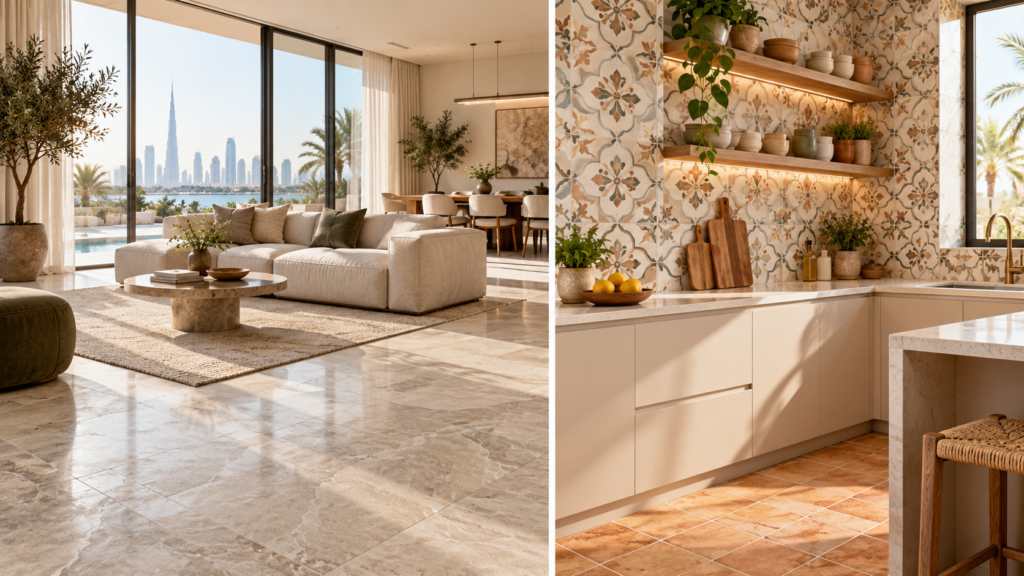
Large-format porcelain tiles are particularly popular in modern UAE villas and apartments.
Marble-effect, stone-effect and concrete-effect porcelain can provide a premium appearance while offering the durability needed for everyday residential use.
Large formats can also reduce the number of visible grout lines, helping create a more spacious and seamless appearance.
Popular options include:
120 × 120 cm
120 × 240 cm
120 × 280 cm
and other large-format slabs depending on the collection.
Kitchens
The kitchen is one of the busiest spaces in a home.
Porcelain tiles work particularly well because they can offer resistance to moisture, staining and daily wear.
For kitchen floors, a matte or suitable slip-resistant finish is normally preferable to a highly polished surface.
Bathrooms
Bathrooms combine moisture, cleaning products and barefoot traffic.
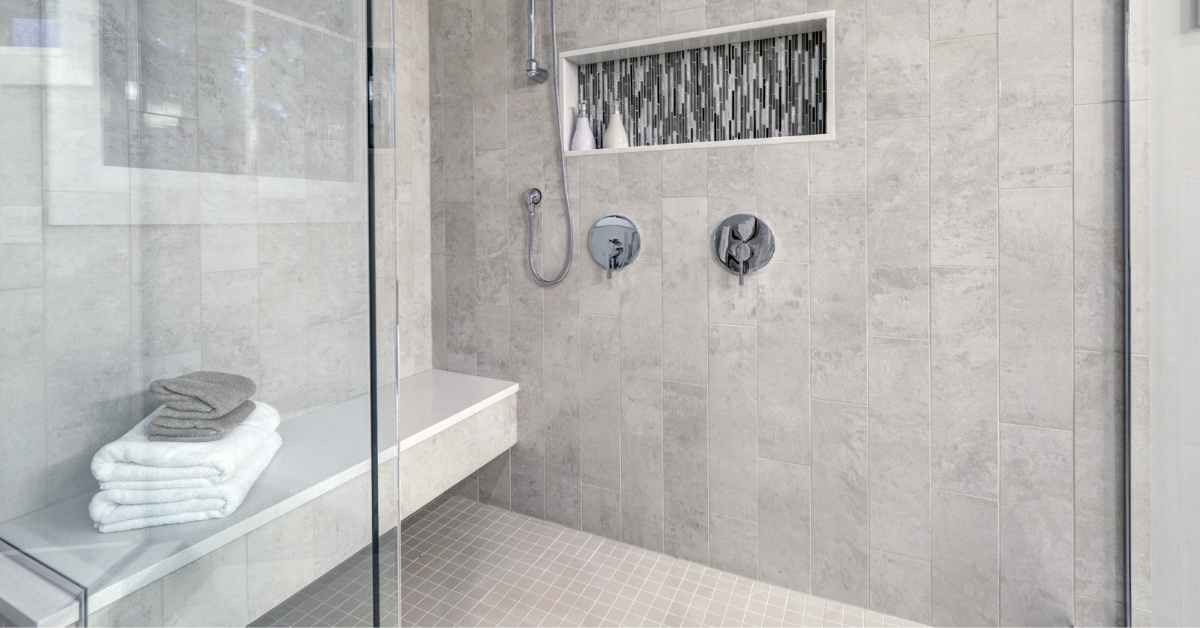
Porcelain floor tiles with appropriate slip resistance can provide both durability and safety, while large porcelain slabs can also create dramatic bathroom walls with fewer joints.
Bedrooms
Porcelain does not have to look cold or industrial.
Modern wood-effect porcelain tiles recreate the appearance of timber while providing the durability and easy maintenance of tile.
This can be particularly attractive for UAE homes where homeowners want a warm wood appearance without using natural timber flooring throughout the property.
Outdoor Areas
Outdoor applications are where the difference between porcelain and ceramic becomes especially important.
For:
• Pool decks
• Villa terraces
• Rooftops
• Garden walkways
• Outdoor kitchens
• Courtyards
a properly specified outdoor porcelain tile or paver is generally the more suitable choice.
The room-by-room guidance in the supplied material similarly recommends porcelain for major residential flooring applications and heavier-duty outdoor use.